
Best time to visit Moremi Game Reserve
Two landscapes, one reserve — and every season tells a different story
Moremi Game Reserve sits at the meeting point of two very different worlds: the permanent waterways and floodplains of the Okavango Delta, and the dry woodland and savannah of the Mopane Tongue and Chief’s Island. That combination is what makes the reserve one of the most diverse safari destinations in Africa — and it’s also why choosing the right month makes such a difference. This guide breaks down what to expect in each month, so you can match your trip to the experience you’re looking for.
Moremi season by season
Moremi delivers excellent game viewing year-round, particularly on the drier eastern side around Khwai. The flood season (May to August) opens up water-based activities across the delta side of the reserve, while the dry months of September and October concentrate wildlife around shrinking water sources for some of the most dramatic sightings of the year.
High water, high season
May – August
- Angola’s floodwaters spread through the delta side of the reserve, peaking in July
- Motorised boating, game drives and walking safaris all on the menu
- Wild dog denning season in the Khwai area — pups often visible from June
- The most popular camps fill up nine to twelve months in advance
The dry season finale
September – October
- Wildlife crowds around permanent lagoons and the Khwai River corridor
- Leopard sightings peak around the Xakanaxa lagoon system
- Stripped-back bush means nothing is hidden — superb for photography
- Temperatures in October can push past 40°C — spectacular wildlife, but pace yourself
Between the seasons
March – April, November
- Late wet season gives way to rising floodwaters and expanding boating routes
- November: landscape greening fast, migrants pouring in, calving season begins
- Rates drop to shoulder-season levels — good conditions at a gentler price
- Changeable weather is part of the appeal — and Moremi handles it beautifully
The green months
December – February
- Over 500 bird species recorded in Moremi — green season is when they peak
- Afternoon thunderstorms produce vivid light and towering cloudscapes
- Some camps close as sustained rain makes tracks in places impassable
- The year’s lowest rates — exceptional value for one of Africa’s finest reserves
Month-by-month guide to Moremi Game Reserve
January and February — the green season in full swing
Moremi at its most verdant. Afternoon thunderstorms roll in fast and leave just as quickly, but the cumulative rainfall is substantial — enough to make tracks in parts of the reserve impassable and force some camps to close for the season. Those that stay open deliver an intimate, uncrowded experience that is hard to replicate at any other time of year. Water levels in the delta channels are at their annual low, but camps near permanent lagoons (notably around Xakanaxa) continue to offer motorised boat cruises, and mokoro may be available as an optional extra depending on water levels and launch points. Birding is the headline act: over 500 species have been recorded in Moremi, and the green months — when migrants are present and breeding colonies are active — are when that figure is closest to its ceiling. Newborn impala, tsessebe and zebra draw predators into the open, and the skies — all towering cumulus and golden late-afternoon light — are a photographer’s playground.
March and April — a reserve in transition
The rains ease through March, and roads that were closed for weeks gradually dry out and reopen. Meanwhile, far to the northwest, the annual flood pulse is already making its way south from Angola’s highlands, entering the Panhandle and beginning the slow journey toward the main delta fan. By April, the first signs of rising water appear in the channels on Moremi’s delta side, and boating excursions extend their reach as new routes become navigable. Daytime temperatures settle into the low 30s, the bush thins noticeably, and game viewing on the Khwai side picks up as surface water in the surrounding mopane woodland dries up. It’s a transitional period that catches many visitors off-guard with how good it can be — and shoulder-season pricing makes it all the more appealing.
May — the month the regulars choose
Speak to repeat Moremi visitors and May is the month that comes up most often. The flood is advancing through the delta side of the reserve, opening fresh boating routes by the day. Blue skies stretch unbroken from horizon to horizon, afternoons sit around 28°C, and the first genuinely cold mornings — single digits before sunrise — add a sharpness to early game drives. As the surrounding bush dries out, wildlife funnels toward permanent water, and predator encounters become noticeably more frequent. On the Khwai side, wild dogs begin scouting for den sites, a prelude to the denning season that draws photographers and specialists from around the world. Pricing has not yet reached its full-peak level at most camps — making May a window of outstanding value for near-perfect conditions.
June and July — Moremi at full capacity
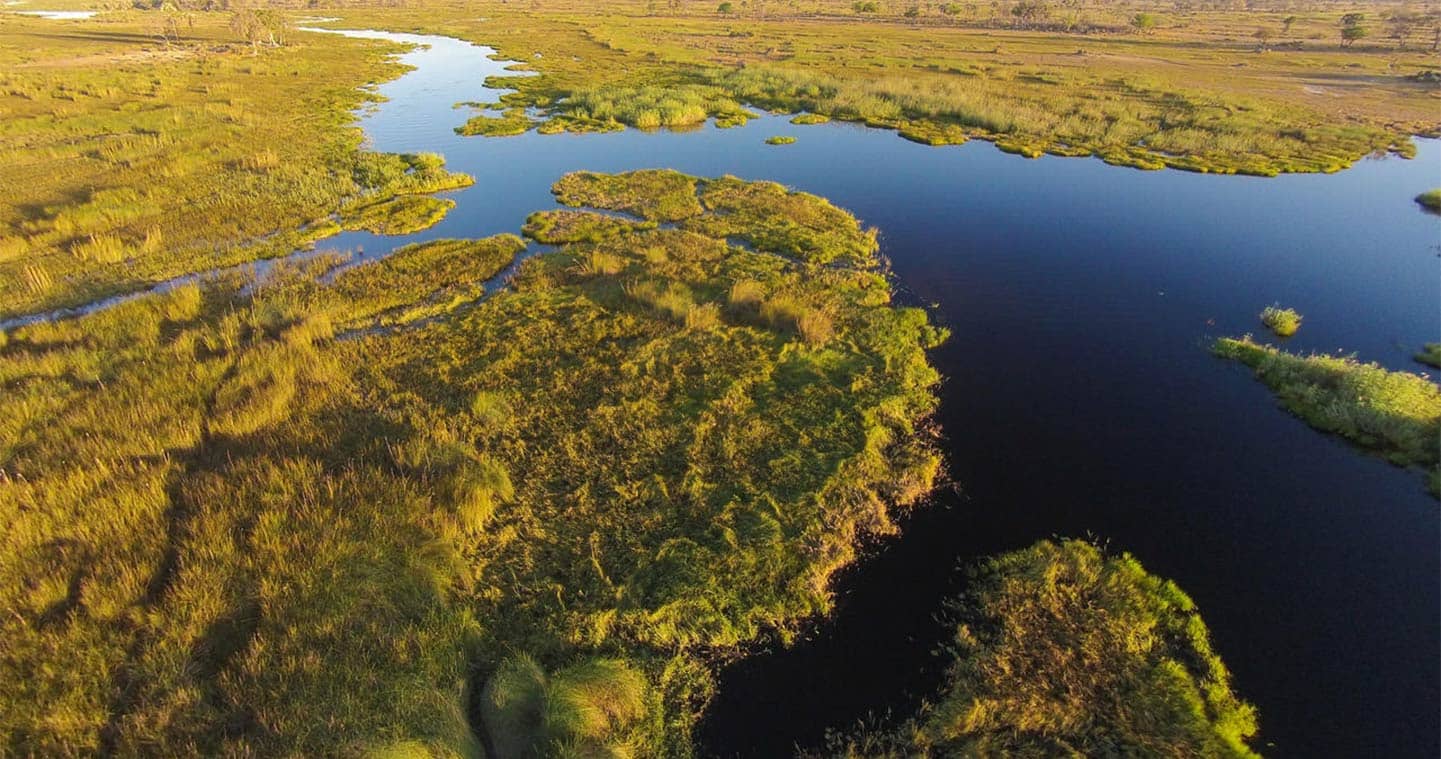
The Okavango flood reaches its greatest extent in July, filling channels and floodplains across the western and northern stretches of the reserve. Motorised boating, game drives, walking safaris, and — at selected camps — mokoro excursions are all running. The visual contrast between water-filled delta and dry Mopane woodland is striking, and the reserve feels like two entirely different ecosystems side by side. Warm, cloudless days give way to nights cold enough for a second blanket — temperatures occasionally dip below 5°C. In the Khwai area, wild dog pups emerge from their dens, offering some of the most sought-after sightings in southern African safari. Lion, leopard and cheetah are all regularly encountered. This is the busiest and most expensive window of the year, and securing your preferred camp typically requires planning nine to twelve months out.
August — the dry season deepens
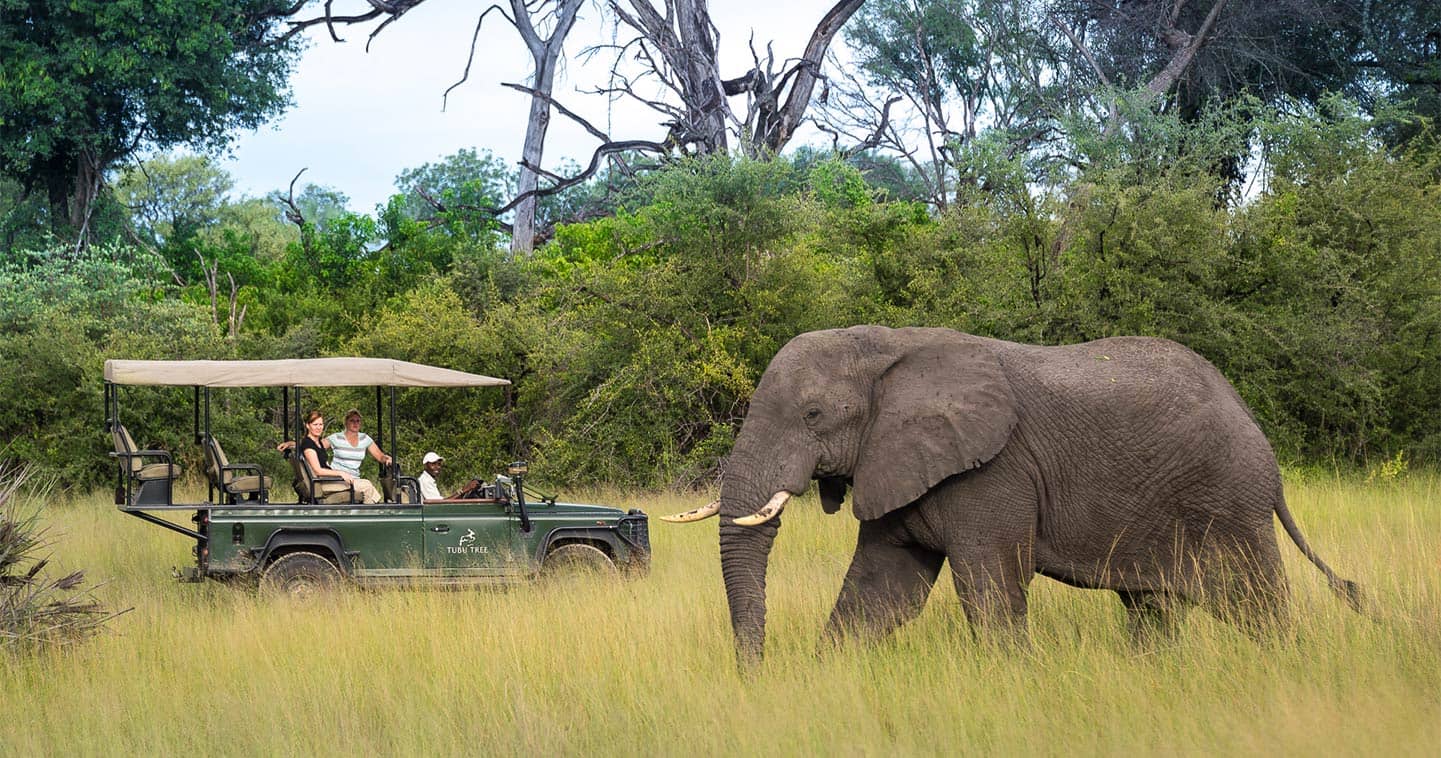
Floodwaters start pulling back, but Moremi’s game viewing only intensifies. The Khwai River becomes a magnet for large elephant and buffalo herds as other water sources disappear, and predator activity around the remaining lagoons and channels is relentless. Around Xakanaxa, leopards grow bolder as prey concentrates near permanent water, and sightings become almost dependable. The bush is noticeably thinner than a month earlier, opening up sight lines that make every drive feel productive. August is widely regarded as the strongest month for big-cat encounters in Moremi, and rates reflect the demand.
September and October — the hot, raw finish to the dry season
Water levels continue to drop, and temperatures climb steadily — by October, midday readings routinely pass 40°C. What the heat takes in comfort, the wildlife gives back in spectacle. Animals mass around the last remaining water, and the stripped-back landscape leaves them fully exposed. The Khwai corridor fills with elephant herds numbering in the hundreds, and lion prides patrol the dwindling pools with a confidence that makes for gripping viewing. Boat cruises from camps on permanent lagoons remain available, though the navigable area is much reduced. For visitors who can handle the afternoon heat — long siestas and cold drinks between morning and evening drives become non-negotiable — this is Moremi at its most primal. Of the two months, September is the easier one to handle; October belongs to those who relish the extremes.
November — the curtain rises on a new season
The first storms of the wet season break the heat, and the reserve responds with astonishing speed. Parched earth greens within days, the air smells of rain and new growth, and migratory birds — bee-eaters, rollers, storks, raptors — arrive in waves from the northern hemisphere. Antelope calving kicks off, pulling predators into peak activity as easy meals multiply. Visitor numbers are low, rates sit at shoulder-season levels, and the combination of fresh landscapes, active wildlife and empty camps makes November one of Moremi’s most underrated months. The trade-off is unpredictable weather — mornings can be stiflingly hot, followed by violent afternoon downpours — but for those who embrace variability, it is deeply rewarding.
December — deep into the wet season
The rains settle into a daily rhythm: hot, humid mornings building toward towering afternoon thunderstorms that clear by sunset. The reserve is at its most photogenic — vivid greens, reflective water, and skies that shift from deep blue to charcoal in minutes. Delta water levels are low (the Angolan flood is still months away), but camps on permanent lagoons around Xakanaxa and Third Bridge keep motorised boat cruises running. Sustained rainfall closes some internal tracks, and a number of camps shut for the season. Those that remain open offer the year’s most competitive rates and an atmosphere of genuine solitude — you are likely to be one of very few visitors in the entire reserve. For birders, photographers drawn to dramatic light, or anyone who values having a wilderness to themselves, this is a quietly compelling time to visit Moremi.
Understanding the Okavango flood
Moremi sits within the Okavango Delta, and the delta’s annual flood cycle is the engine behind the reserve’s seasonal shifts. The floodwaters arrive not with the local rains, but months later — fed by summer rainfall in Angola’s highlands, they reach Moremi in the middle of the dry winter, which is why peak water and peak safari season coincide.
Planning your visit
How far ahead to book
Moremi’s most popular camps — particularly those on Chief’s Island and in the Khwai corridor — fill up fast. For the peak months (May to August), plan nine to twelve months in advance; for shoulder and green season, four to six months is usually sufficient, though last-minute openings do occur.
Packing for Moremi
Charter flights into the reserve restrict luggage to a single 20 kg soft bag — no rigid suitcases. Dress in neutral tones and layer up: mornings in June and July can feel bitterly cold from an open vehicle, while afternoons in October demand sun protection and plenty of water. A packable rain jacket earns its place from November through March.
Understanding rate seasons
Lodges set their own rate calendars, and these don’t always mirror the weather. A camp might charge peak rates from June while May — with near-identical conditions — sits in a cheaper bracket. Others maintain high-season pricing well into September, when conditions are shifting markedly. It pays to compare the actual rate periods against the seasonal realities described above before committing.
Choosing your side of the reserve
Where you stay shapes your experience as much as when you visit. The delta-facing camps — around Xakanaxa, Third Bridge, and Chief’s Island — sit on or near permanent lagoon systems, offering year-round motorised boating with the flood season dramatically extending the reach of those excursions. Mokoro is sometimes available as an optional extra, depending on camp location and water levels. The eastern side — the Khwai River corridor — is drier and more land-focused, with the river itself acting as a permanent draw for wildlife regardless of the flood. Combining both sides gives you the fullest picture of what Moremi has to offer.